Spring is one of the most versatile times of year for fly fishing Tasmania's highland lakes. The wind is up, the fish are feeding hard and there are options both on open water and against the shoreline.
Some of the quieter areas have seemingly started to be active again, and the same approach works across much of the Central Highlands.
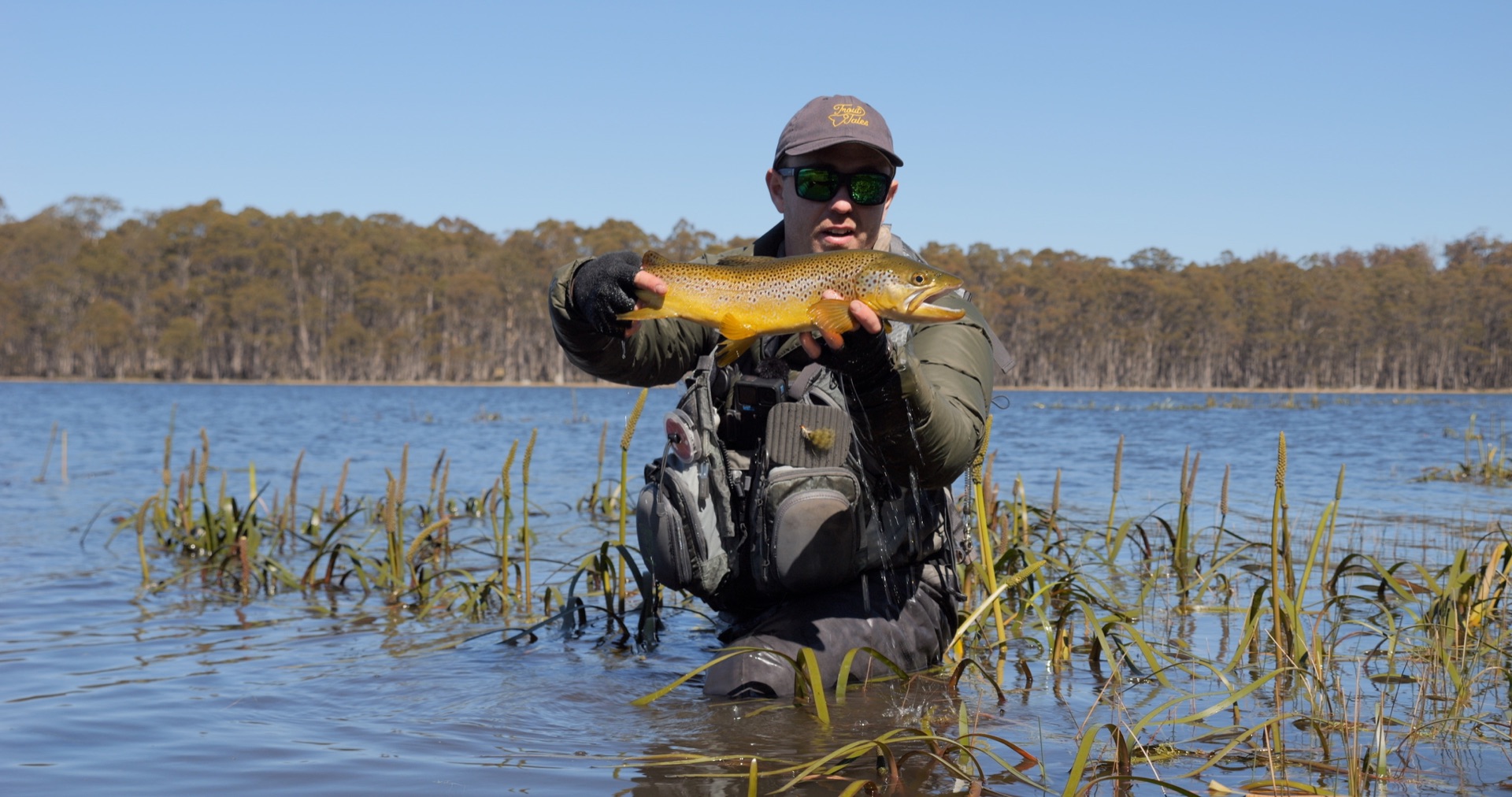
Matt from Trout Tales Tasmania recently spent a full spring day on a Highlands lake, fishing wet flies from the drifting boat in the morning and wading the weedy edges in the afternoon.
Here is how the day played out, from loch style wets in the boat to wading the weedy edges, and the rod, line and flies that worked in the wind.
Quick Facts
- Best conditions: a brisk breeze, ideally around 30 km/h, to keep the boat drifting and the water moving.
- Matt's rod of choice is the Stalker Legend 10 foot 6 weight, for its length and backbone in the wind.
- An intermediate line sinking at around three to five inches per second covers most situations.
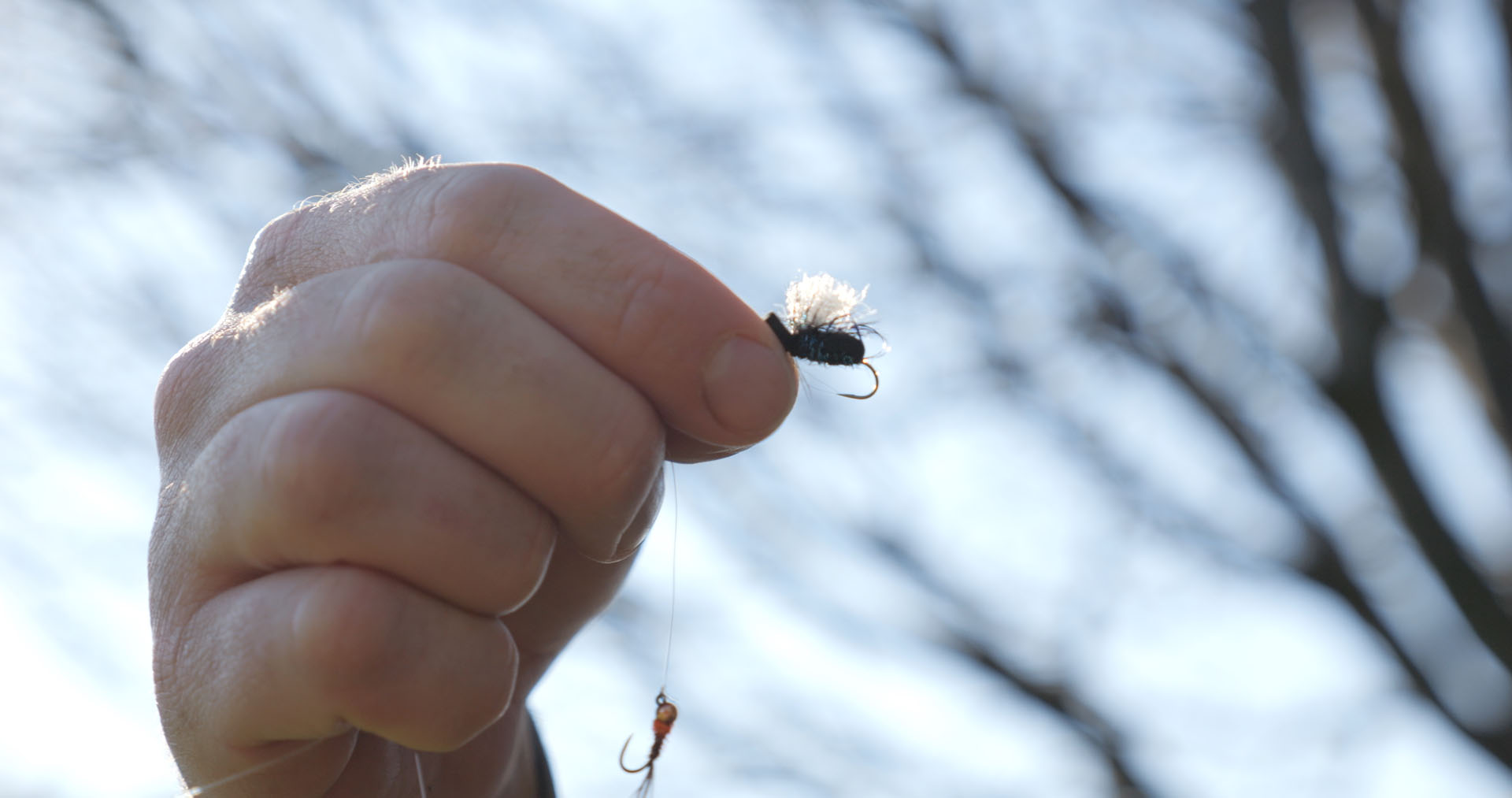
- Two flies did most of the work - a black and red streamer and a green Fuzzle Bugger, both on the top dropper.
- Why fish the shore in the afternoon? There were just as many fish in close as out in the middle.
- Weedy edges hold frogs and galaxias in spring, and the trout follow them in.
Why Wind Matters for Spring Fly Fishing in Tasmania
A northerly of around 30 km/h was pushing across the lake on the morning drift. For loch style wet fly fishing that is exactly what you want, even if still, glassy days suit other techniques better.
Wind does two jobs at once. It keeps the boat moving across fresh water on every drift, and it puts current into the lake itself, stirring up food and drawing trout higher in the water where they will chase a fly.
In the Inland Fisheries Service's annual angler postal survey, Great Lake was the state's most popular fishery with 6,069 anglers and a catch rate of 1.48 fish per angler per day, while nearby Woods Lake recorded the highest lake catch rate at 2.54.
"Don't be afraid of a bit of wind. If you see that on the forecast, that's what we want for this style of fishing. We want to get the boat moving along, get that current in the water, get the food moving around and get the fish up higher, chasing these flies around," says Matt from Trout Tales Tasmania.
Setting Up for Loch Style Wets
The gear on the day was simple and proven. Each piece earns its place when the wind is strong and the flies are weighted.
- The rod. Matt fishes the Stalker Legend in a 10 foot 6 weight for nearly all his early season wet fly work, boat or shore. The extra length helps with line control on a drift, and the backbone gives enough grunt for weighted flies and a sinking line.
- An intermediate line of around three inches per second is his usual starting point. A sweep line works too, and on some days a sink rate of up to five inches per second is worth a try.
- Which flies? Streamers are the backbone of spring wet fly fishing. The fish on the day came to a black and red streamer and a green Fuzzle Bugger, and Matt rates any of the streamer patterns in the shop right through spring.
- Fish a team of two flies rather than one. It gives the trout a choice of profile and depth, and as the morning showed, the top dropper often does the damage.
Fishing the Top Dropper and the Hang
Several trout came up to look at the flies before one committed to the black and red streamer on the top dropper, and that pattern repeated through the morning. On a windy day the fish sit higher, chasing food through the waves, and the fly closest to the surface is the one they see first.
The hang is the final stage of the retrieve, when the flies lift towards the surface near the boat. Matt's advice was to fish every retrieve right to the end, because that is where a lot of following fish finally commit.
"Windy days, generally the fish are up a bit higher, chasing in the waves. Your top dropper fly really comes into its own on days like this. You really need to be fishing right through to the end, fishing the hang really well," explains Matt, head guide at Trout Tales Tasmania. For how wet fly fishing fits into the wider season, our complete guide to Tasmanian trout waters covers the full picture.
Landing Fish from a Drifting Boat
Landing fish in a strong wind takes more thought. With the boat drifting quickly and a chop running across the lake, a good brown can use the conditions against you if you hurry it.
Matt landed his first fish of the morning on the loch style wets and talked through his approach as he went. These are the habits he relied on.
- Land on the drift side. Bring the fish to the side of the boat you are drifting towards, so you are only fighting the fish and not the drift as well.
- Take your time once the fish is close. There is no need to rush a good brown in rough water, and a calm finish avoids pulled hooks at the net.
- Wait for the head to come up. Once the fish lifts its head, it can be slid smoothly into the net rather than chased around the boat.
- Keep fishing the fly right to the boat, since several fish followed a long way before taking.
None of this is complicated, but it adds up over a windy spring morning when you may hook a good number of fish. Landing each one calmly keeps the boat organised, gets the fish back into the water in good condition and puts your flies back on the drift sooner.
For more on how Matt covers water from a boat, read about the new drift boat added to the fleet.
Wading the Weedy Edges in the Afternoon
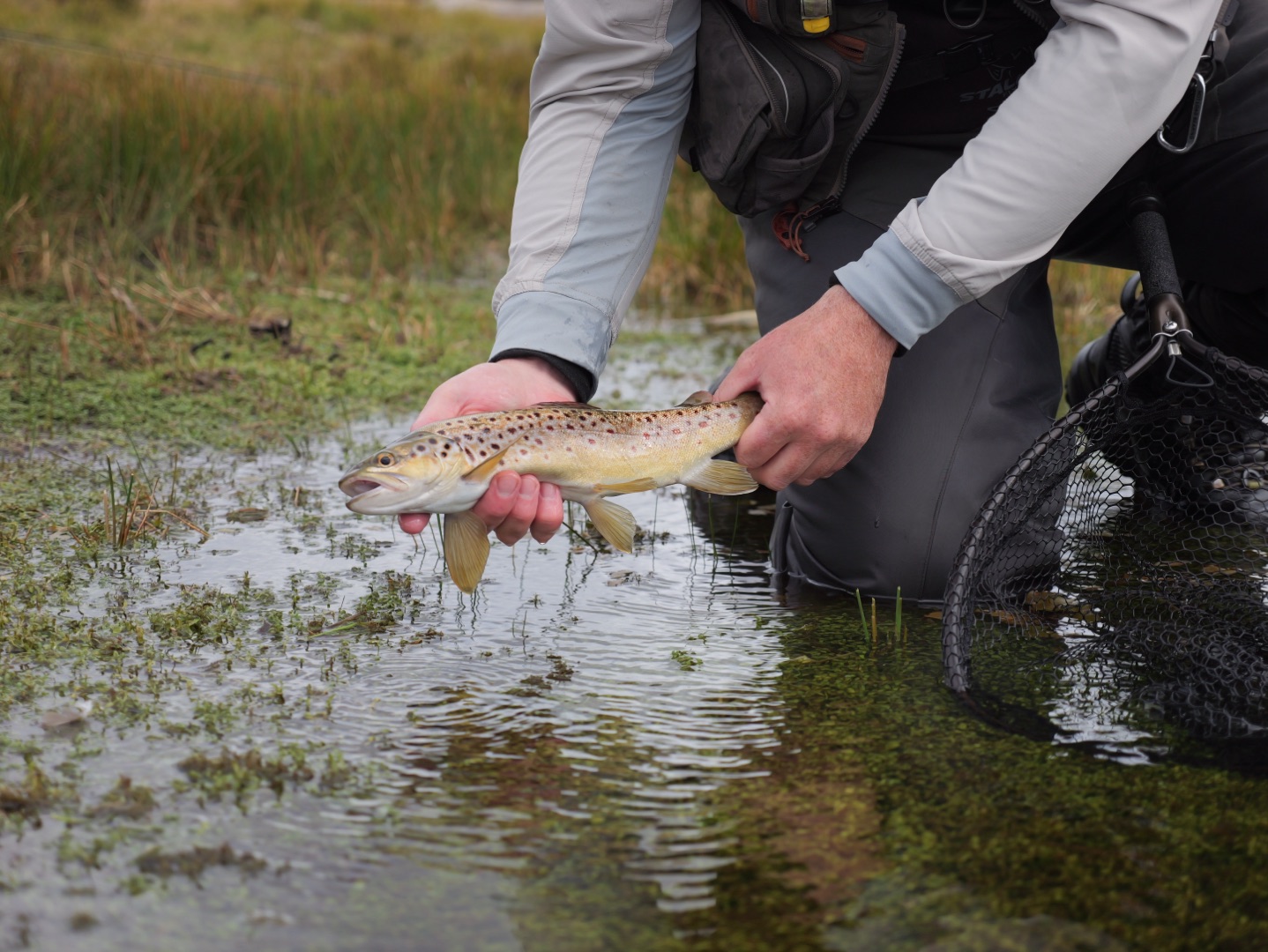
After lunch the boat was packed away and the afternoon was spent wading the shoreline. Within a short time a trout shot out from a clump of weed, made a beeline for the streamer and took it hard in shallow water.
The reason is food. Through spring, frogs are spawning and galaxias move into the shallow margins, and the trout follow them in. By the end of the day it was clear there were just as many fish in close as out in the middle of the lake.
"Fish are really targeting those food sources closely. As the frogs spawn and the galaxias move into the edges, there's a lot of food for them around there. Whether you're in the boat or on the shore, there's some great fishing to be had," Matt noted late in the afternoon.
Boat or Shore? A Spring Comparison
Both approaches worked on the same lake on the same day, and here is how they compared.
Neither approach is better in spring. The boat covers open water quickly when the wind is up, while wading puts you right on top of fish hunting frogs and galaxias in close, and being able to switch between the two is what makes this time of year so productive.
What Anglers Ask About Spring on the Lakes
What happens if the forecast is calm for a spring trip?
Still mornings simply call for a different approach, and the technique is adjusted to suit the day rather than forcing the wet fly. Calm conditions often suit sight fishing and dry flies, so a quiet forecast is not a lost day.
Do I need to bring my own rod and line?
No, quality rods, reels, lines and locally tied flies are supplied on guided trips. You are welcome to bring your own outfit if you prefer to fish a set-up you know well.
Is wet fly fishing suitable for beginners?
Yes, loch style wet fly fishing is one of the more forgiving methods because the wind and drift do much of the work. A guide can help with casting and retrieves early on so you spend more time fishing effectively.
Do I need a licence to fish the Highlands lakes?
Yes, all anglers fishing Tasmania's inland waters need a current Inland Fisheries Service licence. Licences are not included in guided packages and can be bought online before you travel.
Planning Your Spring Session
Spring rewards anglers who fish the wind and follow the food. If you would like to experience fly fishing Tasmania's highland lakes this season with someone who reads those conditions every day, a guided trip is a good way to make the most of it.
Matt can tailor a day or a longer stay around the boat, the shore or both through the Central Highlands and lakes packages, or you can start with an overview of fly fishing in Tasmania and how Trout Tales Tasmania approaches each season.

Hi, I'm Matt Stone - for over fifteen years I’ve developed my passion for fly fishing, wild trout and for the amazing places experienced in Tasmania along the way.
Feature Posts
Ready to book A trip?
Experience all of what fishing in Tasmania has to offer through a personalised fly fishing tour.
Book Now