Summer is undoubtedly the peak time for fly fishing in Tasmania.
Warmer days, active trout, and consistent insect life combine to create some of the most rewarding fishing of the year.
It’s also the season where many anglers choose to book a guided fly fishing trip to make the most of these conditions.
If you’re preparing for a guided fly fishing trip in Tasmania, you might be wondering how the day on the water will unfold and which techniques are likely to be used.
The answer is that it depends on the conditions, the water we’re fishing, and how the fish are behaving on the day.
This guide walks through the key summer fly fishing techniques we commonly utilise on guided trips, with a focus on when and why each one is used.
For a broader look at how these techniques fit across the entire season, you can also explore our Ultimate Guide to the Fly Fishing Season in Tasmania.
The four summer techniques we’ll cover
- Boat dry fly fishing on lakes
- Wading around the edges
- River dry fly fishing
- River nymph under dry
Let’s dive in...
Boat Dry Fly Fishing on Your Guided Trip
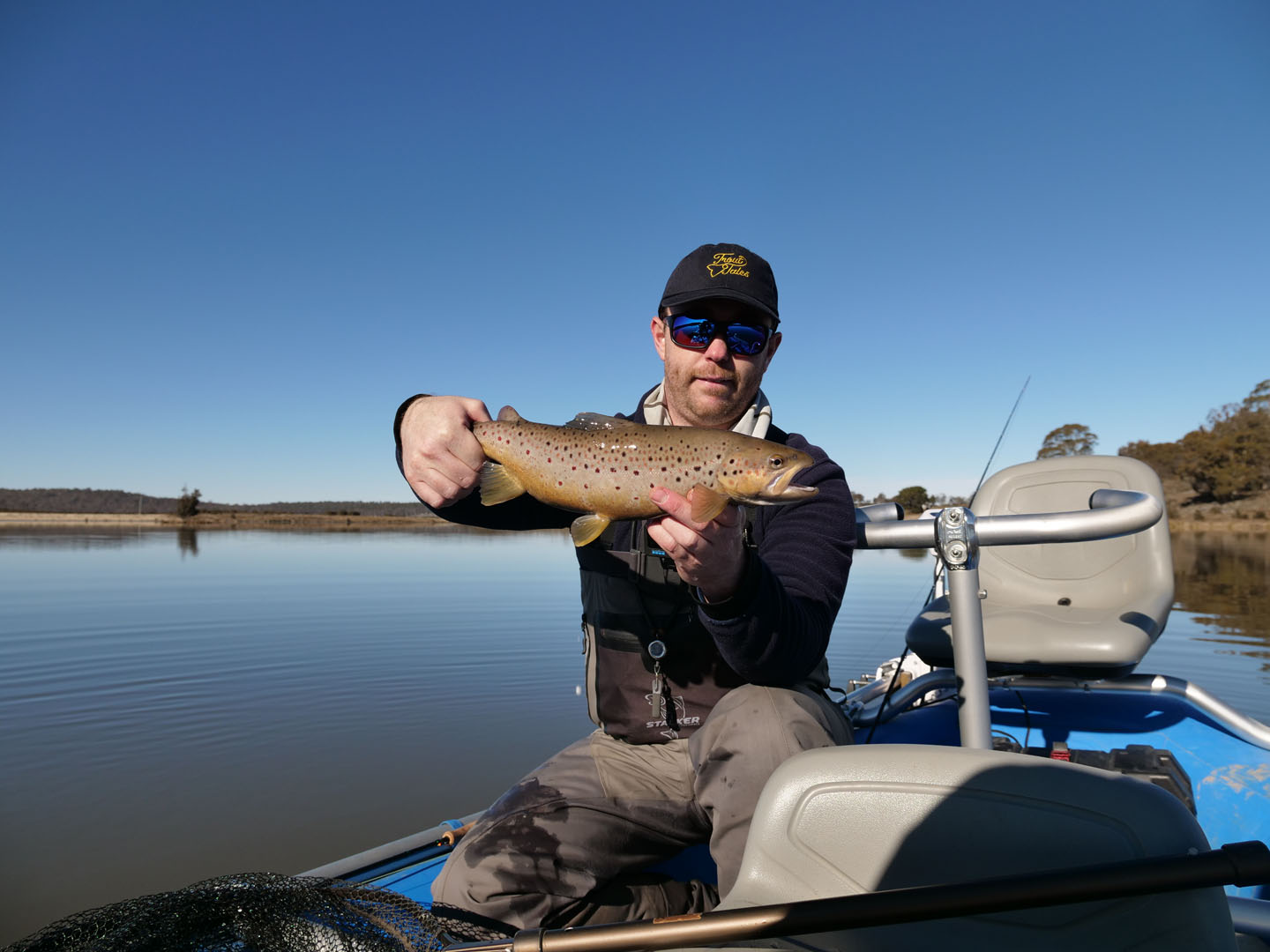
We often choose to fish from the boat when working larger lakes such as Penstock Lagoon or Arthurs Lake.
Boat fishing allows us to cover water efficiently and position ourselves around active fish, especially when trout are spread out across broader areas.
Using a boat gives us flexibility. We can move with the wind, adjust our drift, and reset quickly as fish activity changes.
From a guest’s perspective, it also provides a stable and comfortable platform, making it easier to focus on casting, presentation, and enjoying the experience rather than worrying about footing or fatigue.
Matt often notes that boat sessions regularly produce early success when conditions line up. “Once we’re positioned well and everything’s set up properly, it’s not uncommon for guests to hook their first fish fairly early,” he explains.
“Good positioning and clean presentations make a huge difference.”
As conditions change throughout the day, adaptability becomes important. Cloud cover, wind strength, and surface activity all influence how fish behave. Rather than waiting things out, we’ll often adjust fly choice, drift speed, or positioning to keep creating opportunities. Boat fishing also allows for longer sessions without the physical demands of constant wading, which can be a real advantage on full-day trips.
For local anglers planning to fish lakes this summer, having a small selection of proven dry flies that cover a range of sizes and profiles can be invaluable. We’ve put together a dry fly combo that reflects what we’ve consistently seen work across Tasmanian lakes in recent seasons.
Wading Around the Edges on Your Guided Trip
Wading around the edges is a technique we often turn to when trout are feeding close to shore, particularly during early mornings and late afternoons.
In summer, fish will frequently move into shallow water to hunt, and this approach allows us to fish to them quietly and deliberately.
This technique shines on smaller lakes, sheltered bays, and along gentle shorelines, but it’s also something we’ll often use in conjunction with boat fishing on the same day.
On multi-day trips for example, including our three-day fly fishing package, we might start by covering water from the boat and then switch to wading when fish begin rising tight to the edges.
Wading gives us excellent control over positioning and presentation.
By moving slowly and watching the water carefully, we can target individual fish rather than fishing blind.
Matt often encourages guests to slow everything down when wading. “You’ve got more time here,” he says. “It’s about watching the water, planning each cast, and letting the fish tell you what they want.”
A standout example of this technique comes from a Penstock Lagoon session a couple of seasons ago. We were on the water before sunrise, fishing glassy edges in low light.
Matt hooked into one of the biggest fish of the season, a fight that took close to nine minutes to land.
It was a clear reminder that patience matters not only when fishing, but also when bringing a fish in, particularly on larger lakes where trout can be powerful and persistent.
Matt’s tip for this technique is preparation. Long days on the water can sneak up quickly when you’re wading, so sun protection and lightweight layers make a big difference over time.
If you’re planning a summer trip, our guide to essential gear to pack for a summer fly fishing trip, is a great place to start.
River Dry Fly Fishing on Your Guided Trip
After covering water on the lakes, river dry fly fishing in Tasmania offers a very different experience.
Rivers demand a slower, more technical approach, where success often comes from reading individual fish rather than covering distance.
We lean into river dry fly fishing when water levels are stable and clear, and insect activity is encouraging trout to rise confidently.
Summer provides some of the best opportunities for this, with consistent hatches and predictable feeding windows across many Tasmanian rivers.
Positioning is also critical.
We typically approach fish from downstream, keeping a low profile and using structure such as seams, riffles, and undercut banks to our advantage.
Unlike lake fishing, distance is rarely the goal here. Short, accurate casts and natural drifts are far more important than reach.
Matt often describes river dry fly fishing as a process of stacking small wins. “It’s rarely about nailing it straight away,” he explains. “It’s about getting close enough, making a clean cast, and letting the fly drift properly.
"When all of that comes together, river fish usually respond.”
Conditions can change quickly on rivers, and adaptability plays a big role. If fish become selective or rise inconsistently, we may change fly size, adjust presentation, or move to a new stretch of water.
This flexibility is one of the biggest advantages of fishing rivers with a guide and often leads to more consistent results across the day.
Check out our full masterclass on river fly fishing in Tasmania in the player below:
For local anglers heading out on rivers this season, a small, well-chosen dry fly selection can cover a surprising range of situations.
Our Dry Fly Combo pack reflects patterns and sizes we’ve seen perform reliably on Tasmanian rivers in recent summers.
River Nymph Under Dry on Your Guided Trip
There are days during summer when trout are clearly feeding, but aren’t fully committing to dry flies.
This is when the nymph under dry technique becomes particularly effective and something we’ll often turn to on guided river sessions.
We use this approach when fish are holding just below the surface or showing subtle rises rather than confident takes.
By suspending a nymph beneath a visible dry fly, we can present to fish feeding at different depths while still maintaining a visual reference through the dry.
Matt often explains that this technique rewards attention to detail. “A lot of the takes are subtle,” he says. “Sometimes the dry just hesitates or shifts slightly, and that’s all you get. Learning to recognise those moments is a big part of becoming a better angler.”
This technique is also a great teaching tool on guided trips, helping guests better understand drift, depth, and how trout behave when they’re not fully locked onto surface feeding.
It’s often the difference between a quiet session and a productive one when conditions aren’t perfectly suited to dry flies alone.
For anglers looking to explore this approach independently, having a small selection of nymphs paired with buoyant dries can simplify fly choice and increase confidence when conditions are variable.
Bonus: The Drift Boat and What’s Ahead
Looking ahead, one of the biggest additions to our summer guiding is the increased use of our blue drift boat, which opens up new opportunities across both lakes and rivers.
The drift boat allows us to combine the comfort and efficiency of boat fishing with the precision normally associated with wading rivers.
On lakes, it gives us better control over positioning and drift lines. On rivers, it allows us to access longer stretches of water while maintaining a quiet, controlled approach to rising fish and productive edges.
Matt sees the drift boat as a natural extension of how we already fish.
“It’s not about replacing any one technique,” he explains. “It just gives us more options. We can adapt faster, fish more water efficiently, and still slow things down when conditions call for it.”
For guests, it also means less physical strain over a full day and more time focused on fishing rather than logistics.
As we continue to refine how we use the drift boat across different fisheries, it’s becoming an increasingly valuable part of our summer guiding program.
You can see the drift boat in action and how it fits into our summer approach in the video .
Wrapping Up: What to Expect on a Summer Guided Fly Fishing Trip
Summer fly fishing in Tasmania offers variety, flexibility, and some of the most consistent trout behaviour of the season.
Whether we’re drifting a lake in the boat, stalking edges on foot, or working rising fish on rivers, the techniques we use are always shaped by the conditions and how the fish are feeding on the day.
The advantage of a guided trip is having the freedom to adapt. Rather than committing to a single approach, we move between techniques as conditions change, giving guests the best chance to learn, improve, and enjoy productive fishing throughout the day.
As Matt often puts it, “Summer gives us options. If you stay observant and stay flexible, there’s usually a way to make things work.”
If you’re planning a summer trip and want to make the most of Tasmania’s peak fly fishing season, we’d love to have you join us on the water.
Get in touch or book a guided day trip, and we’ll tailor the experience to suit the conditions, the water, and your goals for the day.

Hi, I'm Matt Stone - for over fifteen years I’ve developed my passion for fly fishing, wild trout and for the amazing places experienced in Tasmania along the way.
Feature Posts
Ready to book A trip?
Experience all of what fishing in Tasmania has to offer through a personalised fly fishing tour.
Book Now